
Endoscopy is a medical procedure that allows visualization of the inside of the digestive tract and is a fundamental tool in the evaluation of gastrointestinal disorders.
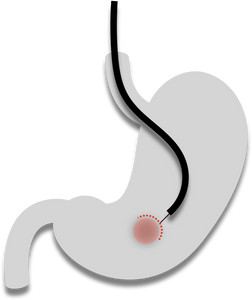
Digestive endoscopy is the most accurate technique for evaluating the mucosa of the digestive tract. Technological advances in recent years have enabled the development of high-precision optical systems that allow visualization of blood vessels and glandular structures where digestion and nutrient absorption take place.
It is performed using flexible instruments equipped with advanced optical and electronic systems, making it possible not only to visualize the mucosal layer but also to carry out biopsies and minimally invasive therapeutic procedures.
At ICAdig, we offer advanced digestive endoscopy services to provide you with accurate diagnoses and effective treatments.
Today, there is a wide variety of endoscopes available in different lengths, diameters, and configurations, allowing access to the entire digestive tract, from the mouth to the anus, and more recently, also to the interior of the extrahepatic bile ducts and the main pancreatic duct.
The development of modern high-definition optical systems and vascular and mucosal contrast-enhancing software has made endoscopy the primary diagnostic tool for cancer and its precursor lesions.
For this reason, it is now possible not only to detect these conditions at an early stage, but also to prevent them through the treatment of precancerous mucosal changes.
Chronic inflammation of the colon and rectum is a fundamental characteristic of Crohn’s disease and ulcerative colitis. There is a wide range of infectious, drug-related, and autoimmune conditions that can cause both acute and chronic inflammation. Taking biopsies during endoscopic procedures helps clarify the underlying mechanism of the disease and guide appropriate treatment.
Digestive endoscopy is the first-choice test for the diagnosis and treatment of any signs of internal bleeding.
They are characterized by the displacement of the gastroesophageal junction from its normal anatomical position in the abdomen.
These are protrusions of the mucosa. They can have various shapes and may result from inflammatory or neoplastic conditions, either benign or malignant. Endoscopy not only allows for their detection but also enables their treatment.
Ulcers involve the loss of integrity of the mucosal barrier. Their causes are varied, but certain medications and chronic infection of the gastric mucosa by H. pylori are the most common.
Scarring associated with chronic inflammation of any kind, including gastroesophageal reflux and intestinal ulcers, can lead to areas of stenosis, especially in narrower regions such as the esophagus, duodenum, or the left side of the colon. Endoscopic dilation is the first-line treatment in most cases.
Chronic exposure of the esophageal mucosa to gastric acid can cause long-term changes in some individuals, predisposing them to cancer of the gastroesophageal junction. Early diagnosis and regular surveillance are the main measures for preventing cancer in this area.
Caused by gastroesophageal reflux, bacterial, fungal, or viral infections, or medications. Less commonly, certain allergic or autoimmune conditions can also lead to esophagitis.
Scarring associated with chronic inflammation of any kind, including gastroesophageal reflux and intestinal ulcers, can lead to areas of stenosis, particularly in narrower regions such as the esophagus, duodenum, or the left side of the colon. Endoscopic dilation is the first-line treatment in most cases.
Currently, a wide variety of endoscopes are available in different lengths, diameters, and configurations, allowing access to the entire digestive tract, from the mouth to the anus, and more recently, also to the interior of the extrahepatic bile ducts and the main pancreatic duct.
Before the endoscopy, you will need to fast, which means you should not eat or drink anything for several hours.
For colon and rectal endoscopies, bowel preparation with laxatives is required to ensure the intestine is clean.
In some cases, you may also need to stop taking certain medications before the procedure. Since all procedures are currently performed under sedation, you should attend your appointment accompanied by an adult.
Before starting the endoscopy, the medical staff will review your medical history and any symptoms you may have.
Measures will be taken to monitor your vital signs, such as blood pressure and heart rate.
Anesthetic sedation ensures that the patient does not experience discomfort during the procedure. In some cases, the anesthesiologist may also use a local anesthetic in the throat.
During the procedure, continuous monitoring of your vital signsheart rate, blood oxygen levels, and blood pressure is performed.
The endoscope is a flexible probe with a lighting system and cameras located at its tip. It also has a gas insufflation system, usually using air or CO₂, to expand the segment of the intestine being examined.
While the patient is lying down and sedated, the doctor controls the movement of the endoscope through the digestive tract using controls that allow for precise maneuvering.
As the endoscope advances, the doctor has real-time images displayed on a video monitor.
Images can be captured for later evaluation, and biopsies can be taken if necessary.
If issues are detected during the endoscopy, such as polyps or narrowed areas, the doctor can perform therapeutic procedures at that time, such as polyp removal or dilation of strictures.
If problems are detected during the endoscopy, such as polyps or narrowed areas, the doctor can perform therapeutic procedures at that time, including polyp removal or dilation of strictures.
After the procedure, you will be taken to a recovery room until the effects of the sedation have completely worn off.
Some people may experience mild discomfort in the throat or abdomen, but this usually resolves quickly.
After sedation during an endoscopy, some people may experience certain discomforts or side effects. It is important to keep in mind that the response to sedation can vary from person to person.
It is crucial to follow the medical team’s instructions after the procedure, including guidelines on eating, drinking, and physical activity. If discomfort persists or becomes concerning, it is important to contact the doctor who performed the procedure for further guidance.
Sedation may leave individuals feeling drowsy or fatigued. You may want to rest or sleep for a while after the procedure.
Some people may experience mild confusion or difficulty concentrating for a short period after sedation. This usually improves quickly as the effects of the sedation wear off.
The throat may feel slightly irritated or sore after an oral endoscopy. Its occurrence varies depending on the type of endoscope used for each procedure, but it is usually mild and short-lived.
Mild abdominal discomfort may occur due to the air introduced during the procedure to improve visualization. Passing the gas through the mouth or anus in the following minutes usually resolves the discomfort in almost all cases. If not, your doctor will provide guidance on measures to minimize any remaining discomfort.
Some people may experience mild nausea or vomiting after sedation. This is more common in longer procedures or in individuals prone to this type of reaction.
The duration of a digestive endoscopy can vary depending on several factors, such as the type of procedure, the complexity of the case, the need for additional therapeutic interventions, and the patient’s individual response. In general, most upper digestive tract endoscopies, which include the esophagus, stomach, and duodenum, usually take between 15 and 60 minutes.
Diagnostic endoscopies, especially when no special auxiliary techniques are required, generally take less time than therapeutic procedures. The complexity and technical difficulty of therapeutic procedures can range from a few minutes to several hours, such as those performed for the treatment of digestive cancers.
Recovery from sedation varies from person to person, but many patients are usually alert and able to leave the medical setting within 15 to 20 minutes after the procedure. It is important to follow the medical team’s instructions regarding post-procedure precautions and activity restrictions, particularly driving or performing tasks that require a high level of attention.
Key factors related to the duration of an endoscopy include:
Certain medical conditions can make the procedure more complex, which may extend the duration of the endoscopy.
The ease of endoscope insertion and the need to perform additional maneuvers can affect the duration of the procedure.
The duration of the procedure can vary depending on whether it is a standard diagnostic endoscopy or if additional therapeutic procedures are being performed, such as polyp removal or dilation of narrowed areas.
The administration of sedation can affect how long the patient remains sedated and may also influence the total time required for the endoscopy.
In addition to the procedure time itself, the time required for pre-procedure preparation and post-procedure recovery should also be considered.
Proper indication for endoscopy is the first step in addressing digestive issues across multiple areas:
Although taking a thorough medical history is the most important element for diagnostic guidance, in some cases it is necessary to visualize the mucosa to assess its severity, prognosis, and to perform biopsies
In most cases, treatment can be carried out during the initial diagnostic procedure itself.
For more complex therapeutic procedures, a second endoscopic session will need to be scheduled.
In certain conditions, it is necessary to periodically monitor inflammatory activity in order to determine whether adjustments to pharmacological treatment are required.
This is the case with Barrett’s esophagus, certain types of chronic gastritis, and inflammatory bowel diseases such as ulcerative colitis and Crohn’s disease.
Early detection of chronic inflammatory conditions, polyps, and tumors allows for minimally invasive treatment with high cure rates. This is especially important in the preventive surveillance of patients at high risk for cancer, particularly individuals who carry genetic mutations that increase their susceptibility to neoplasms.
These include Lynch syndrome, familial adenomatous polyposis, and a wide range of other conditions associated with gastrointestinal and gynecological cancers, among others.
The detection of asymptomatic disorders can be crucial in implementing preventive treatments.
This is the case with certain advanced liver diseases, which may be associated with the development of varices in the esophagus or stomach that, if left untreated, can lead to severe bleeding.
At ICAdig, we strive to be leaders in providing General Gastroenterology services that go beyond conventional treatment. We will be delighted to assist you, always working hand in hand with our digestive health specialists. At ICAdig, you may request a video consultation or an in-person appointment at one of our centers in Madrid, Spain.